
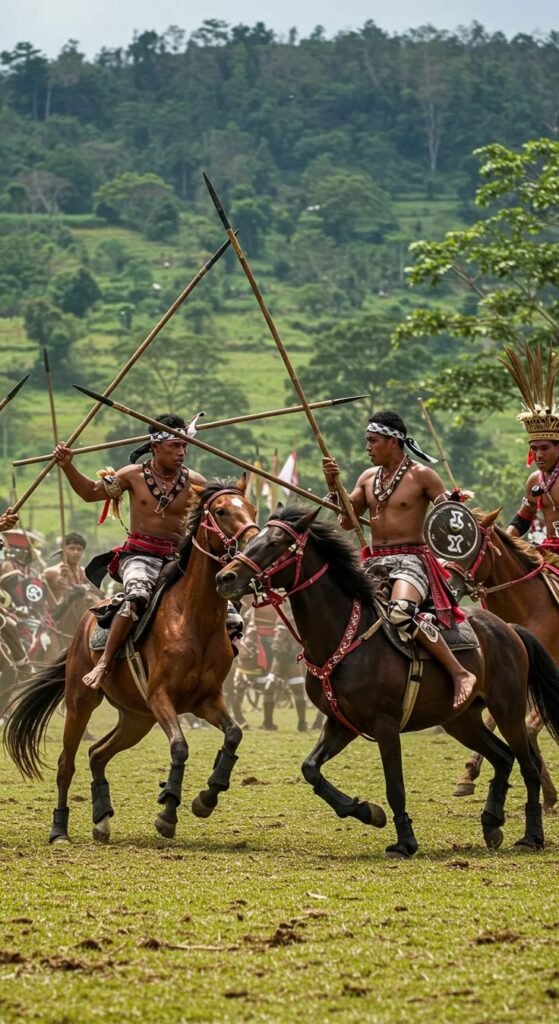
The Pasola Festival is one of the most fascinating and dramatic cultural events in Indonesia. Held annually on Sumba Island, this traditional warrior festival takes place between February and March, attracting travelers, photographers, and cultural enthusiasts from around the world.
Known for its intense horseback spear battles, Pasola is far more than a tourist attraction. It is a sacred ritual rooted in ancient beliefs, agricultural traditions, and the spiritual life of the Sumbanese people. During the festival, dozens of horsemen charge across open fields while throwing wooden spears at each other, creating one of the most unique cultural spectacles in Southeast Asia.
In this article, we explore the history, meaning, dates, and travel experience of the Pasola Festival in Sumba.
What is the Pasola Festival?
Pasola is a traditional ritual battle where groups of horse riders throw wooden spears (called “hola” or “sola”) at their opponents while galloping across a field. The event represents a ceremonial war between villages.
The word Pasola itself comes from the local Sumbanese word “sola”, meaning a wooden spear used during the ritual combat.
The festival is performed by skilled riders who wear colorful traditional clothing, headgear, and ornaments, while riding the famous Sumbawa Horse. These small but strong horses are known for their agility and speed, making them perfect for the fast-paced battles of Pasola.
During the event, hundreds of spectators gather around the field to watch the riders charge toward each other and throw spears in dramatic encounters.
While the spears today are often blunt to reduce serious injuries, the competition remains intense and requires great riding skill and bravery.
The Spiritual Meaning Behind Pasola
For the people of Sumba, Pasola is not merely a festival or cultural performance. It is a sacred ceremony connected to their traditional belief system known as the Marapu Religion.
Marapu beliefs emphasize harmony between humans, ancestors, and nature. The Pasola ritual is performed as a way to:
- Honor the spirits of the ancestors
- Ensure fertile land and a successful harvest
- Maintain balance between communities
One of the most important symbolic aspects of the festival is the spilling of blood during the battle. Traditionally, it is believed that the blood that falls on the ground will fertilize the soil and bring prosperity to the upcoming agricultural season.
Although modern safety measures are sometimes applied today, the symbolic meaning remains deeply respected by the local communities.
The Connection Between Pasola and the Nyale Sea Worms
The exact date of Pasola is determined by the appearance of Nyale Sea Worm, a rare natural phenomenon that occurs along the coasts of Sumba.
Every year, during a specific full moon between February and March, thousands of Nyale sea worms emerge from the ocean and gather along the beaches.
This event signals the beginning of the Pasola ritual season.
Local spiritual leaders known as Rato priests carefully observe the appearance of Nyale to determine the correct time for the Pasola ceremony. The worms are also collected and eaten by the local people, who believe they bring good luck and fertility.
The connection between Pasola and Nyale demonstrates the deep relationship between nature, spirituality, and agriculture in Sumbanese culture.
The Legend Behind Pasola
Like many ancient traditions, Pasola is also associated with a powerful local legend.
According to the story, a woman from one village believed that her husband had died while traveling at sea. Believing she had become a widow, she remarried a man from another village.
However, one day her first husband returned alive. The situation created a serious conflict between the two villages.
To end the dispute and prevent further bloodshed, the woman sacrificed herself by jumping into the sea. According to the legend, she transformed into Nyale sea worms, which appear every year along the coast.
The Pasola ritual was then created as a symbolic battle to maintain peace between the communities and to commemorate this tragic story.
Today, the legend continues to be told during the Pasola ceremonies.
Where the Pasola Festival Takes Place
The Pasola Festival is mainly celebrated in several regions of western Sumba, located in West Sumba Regency and surrounding areas.
Some of the most famous Pasola locations include:
Wanokaka
Wanokaka
One of the most popular Pasola celebrations, Wanokaka, attracts both locals and tourists every year. The nearby beaches are also known for the Nyale sea worm phenomenon.
Kodi
Kodi
Kodi hosts one of the earliest Pasola events and features strong participation from local warriors and villages.
Lamboya
Lamboya
Another important Pasola site where traditional ceremonies are performed before the battle begins.
Gaura
Gaura
Gaura also hosts Pasola events with local rituals and traditional celebrations.
Each region organizes the festival on different days, so travelers visiting Sumba during February–March may have the chance to see more than one Pasola event.
What Happens During the Pasola Festival?
Pasola is not just a single event but a series of traditional rituals and ceremonies.
The celebration usually includes:
1. Traditional Rituals
Before the battle begins, spiritual leaders perform ceremonies to communicate with the ancestors and ask for blessings.
2. Nyale Harvesting
Local people gather along the beaches early in the morning to collect Nyale sea worms.
3. Warrior Preparation
Horse riders prepare their horses and dress in traditional costumes.
4. The Spear Battle
Two groups of riders charge toward each other across the field, throwing wooden spears while trying to avoid being hit.
5. Cultural Celebrations
The event is accompanied by traditional music, community gatherings, and festive celebrations.
The atmosphere is intense, energetic, and deeply rooted in cultural pride.
Why Travelers Visit Pasola
The Pasola Festival has become one of the most iconic cultural experiences in Indonesia.
Travelers visit Sumba during this period to witness:
- One of the last traditional horseback battle festivals in the world
- Authentic Sumbanese culture and rituals
- Unique traditional costumes and warrior displays
- Beautiful landscapes of Sumba Island
- Traditional villages and megalithic stone tombs
For photographers and cultural travelers, Pasola offers extraordinary visual moments and storytelling opportunities.
Travel Tips for Visiting the Pasola Festival
If you plan to visit Sumba to see Pasola, here are a few helpful tips:
Plan Your Trip Between February and March
Pasola dates vary every year depending on the Nyale’s appearance, so it is best to check the festival schedule in advance.
Fly to Sumba
Travelers can reach Sumba through:
- Tambolaka Airport
- Umbu Mehang Kunda Airport
Both airports connect Sumba with Bali and other Indonesian cities.
Book Accommodation Early
Because Pasola attracts many visitors, hotels and resorts can fill up quickly during the festival season.
Respect Local Traditions
Pasola is a sacred ritual. Visitors should follow local guidance and respect the traditions of the Sumbanese communities.
Experience Pasola With a Sumba Cultural Tour
Many travelers combine the Pasola Festival with a Sumba Island adventure, exploring traditional villages, waterfalls, and scenic beaches.
A typical Sumba tour during Pasola may include visits to:
- Weekuri Lagoon
- Mandorak Beach
- Ratenggaro Village
- Lapopu Waterfall
This combination allows visitors to experience both Sumba’s natural beauty and cultural heritage.
Conclusion
The Pasola Festival on Sumba Island is one of Indonesia’s most extraordinary cultural traditions. Held annually between February and March, this ritual horseback battle reflects centuries-old beliefs, spiritual traditions, and the deep connection between the Sumbanese people and their land.
More than just a festival, Pasola is a living heritage that continues to preserve the identity and culture of Sumba.
For travelers seeking authentic cultural experiences, witnessing Pasola is truly a once-in-a-lifetime journey into one of Indonesia’s most fascinating traditions.