
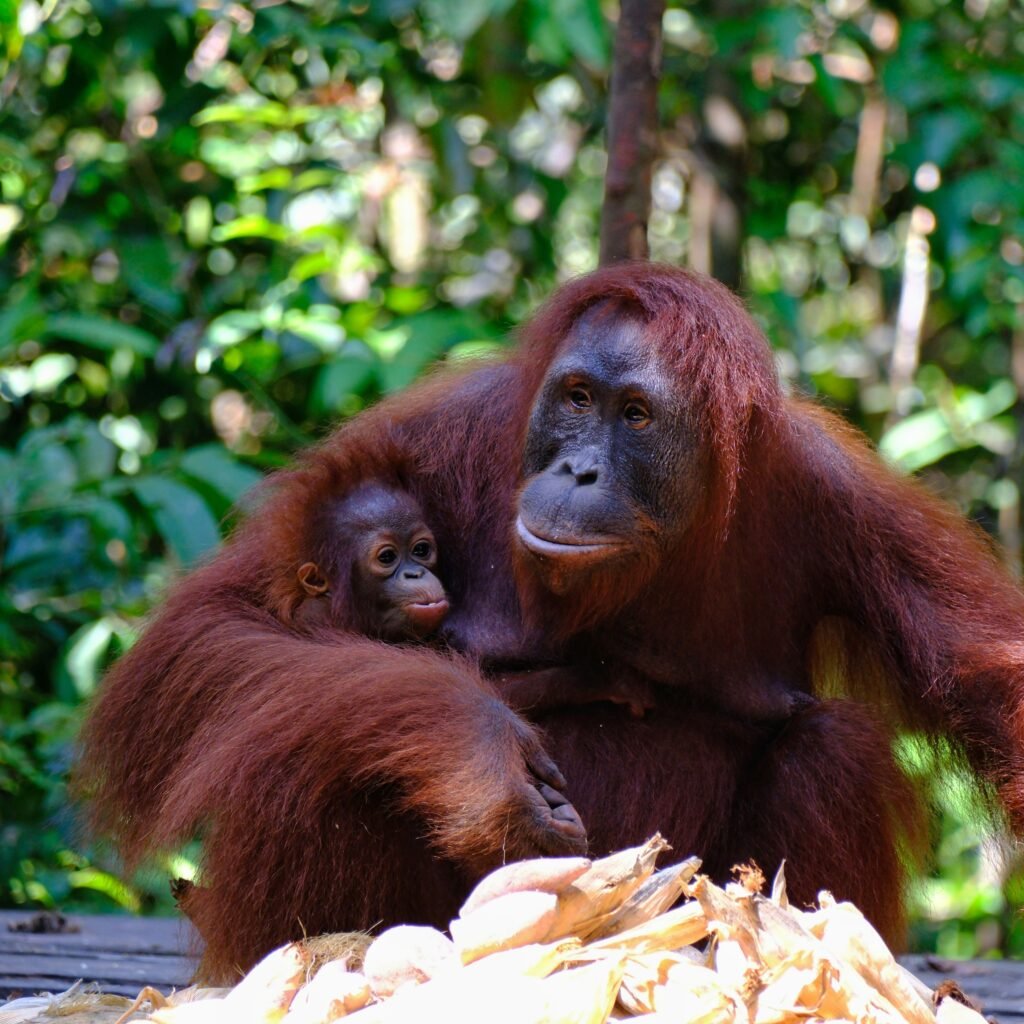
Introduction to Orangutans
Orangutans are prominently recognized as one of the most intelligent primates and are classified within the family Hominidae, which includes great apes and humans. There are three main species of orangutans: the Bornean orangutan (Pongo pygmaeus), the Sumatran orangutan (Pongo abelii), and the recently identified Tapanuli orangutan (Pongo tapanuliensis). These species are primarily found in the tropical rainforests of Borneo and Sumatra, making them unique to these regions.
In terms of physical attributes, orangutans are characterized by their long arms, which can reach up to 7 feet in length, providing them with excellent maneuverability in their arboreal habitats. Adult males are significantly larger than females, typically weighing between 100 to 200 pounds; females generally weigh around 50 to 100 pounds, a size difference that may be attributed to sexual dimorphism. Their striking reddish-brown fur, along with their distinctive facial features and large, expressive eyes, contribute to their unique appearance.
Orangutans have a remarkable lifespan, with some individuals living up to 50 years or more in the wild. In captivity, they can live even longer, often exceeding 60 years. This longevity is significant as it allows them to develop advanced cognitive abilities and complex social structures. Their behaviors, which include using tools and exhibiting problem-solving skills, have intrigued researchers and animal lovers alike, solidifying their reputation as unique beings within the animal kingdom.
Understanding the characteristics of orangutans is crucial, not only to appreciate their role in biodiversity but also to recognize the pressing need for conservation efforts in protecting their dwindling habitats due to deforestation and human encroachment. This introduction lays the groundwork for a deeper exploration of their behavior, diet, and habitat in the sections that follow.
Orangutan Behavior: Social Structure and Intelligence
Orangutans exhibit a range of behavioral traits that reveal their complex social structures and considerable intelligence. Unlike many primate species, orangutans are predominantly solitary animals, with adult males often living alone or in loose social groups. However, females, particularly those with offspring, may form temporary associations with other mothers and their young. This flexible social structure allows orangutans to adapt to their environment and maximize their foraging success.
Communication among orangutans is a critical aspect of their social interactions. They utilize a variety of vocalizations, gestures, and facial expressions to convey messages to one another. These communication methods are essential for coordinating mating, signaling danger, and expressing emotions. For instance, the distinct long calls of adult males can travel long distances through dense forest, allowing them to communicate over vast areas. Such vocalizations not only serve social purposes but also indicate their presence to potential rivals.
Further emphasizing their intelligence, orangutans demonstrate remarkable problem-solving abilities and tool use. They have been observed using sticks to extract insects from tree bark or leaves to create makeshift gloves when handling spiky fruits. Their cognitive skills extend to understanding and manipulating their environment, highlighting their adaptability. Studies indicate that orangutans can also engage in planning for future needs, such as storing food for later consumption, demonstrating foresight and advanced cognitive capacity.
These behavioral traits underscore the complexity of orangutans’ social structures and their intelligence, distinguishing them as one of the most fascinating primates. Researchers continue to explore these aspects, revealing not just their solitary nature but also the profound cognitive abilities that enable them to thrive in the diverse habitats of their forest home.
Diet of Orangutans: What Do They Eat?
Orangutans are predominantly frugivores, which means that their primary dietary component consists of fruits. This fruit-focused diet is crucial for their survival and plays a significant role in their overall habitat preferences. The diverse ecosystems of the rainforests in Borneo and Sumatra provide a rich variety of fruit-bearing trees, such as durian, figs, and mango, which are favorites among orangutans. Their specialized molars are uniquely adapted to help them consume a wide range of fruits and other plant materials, allowing them to thrive in these environments.
Besides fruits, orangutans also consume leaves, bark, and flowers. During certain seasons when fruit availability decreases, they exhibit adaptability by foraging for tender leaves and other vegetation. Leaf consumption becomes particularly prevalent in areas where fruits are scarce, demonstrating the species’ flexibility in dietary choices. In addition to plant materials, orangutans occasionally incorporate insects into their diet, offering a source of protein and other essential nutrients.
The foraging behavior of orangutans is quite complex, often requiring them to travel great distances and spend considerable time searching for food. This behavior not only fulfills their nutritional needs but also significantly contributes to the health of the rainforest ecosystems. Through their feeding habits, orangutans play a vital role in seed dispersal, which aids in forest regeneration. As they consume fruits and travel, they inadvertently transport seeds to new locations, facilitating the growth of new plants. Thus, their diet is integral to maintaining the ecological balance within their habitats.
Habitat and Conservation Status of Orangutans
Orangutans primarily inhabit the tropical rainforests of Borneo and Sumatra, two islands that represent the core of their natural environment. The rich biodiversity of these rainforests provides them with the necessary resources for survival, including an abundance of fruits, leaves, and bark. Their adaptation to this arboreal life allows them to move effortlessly among the trees, making them one of the most agile primates in a forest setting. Unfortunately, this habitat faces significant threats from human activities, particularly deforestation and habitat degradation.
The alarming rate of deforestation in Borneo and Sumatra is largely driven by the demand for palm oil, timber, and agricultural land. As rainforests are cleared for these purposes, orangutans are forced into fragmented habitats, which significantly limits their access to food and increases their vulnerability to poaching. Habitat loss not only jeopardizes their survival but also disrupts the intricate ecosystems that depend on their presence for balance. Consequently, orangutans have been classified as critically endangered, highlighting the urgent need for conservation initiatives.
Efforts to conserve orangutan populations and their habitats have gained momentum in recent years. Conservation organizations are actively working on the ground to protect these vital ecosystems through reforestation projects and the establishment of protected areas. Additionally, public awareness campaigns aim to educate communities about the importance of preserving orangutans and the intricate relationships they maintain with their environment. International cooperation is essential, as many orangutans are also affected by global market factors. Safeguarding their habitats will not only benefit these remarkable primates but also contribute to the overall health of the rainforest ecosystems in which they reside. In summary, addressing the threats faced by orangutans and promoting effective conservation strategies is imperative for ensuring their survival for future generations.