
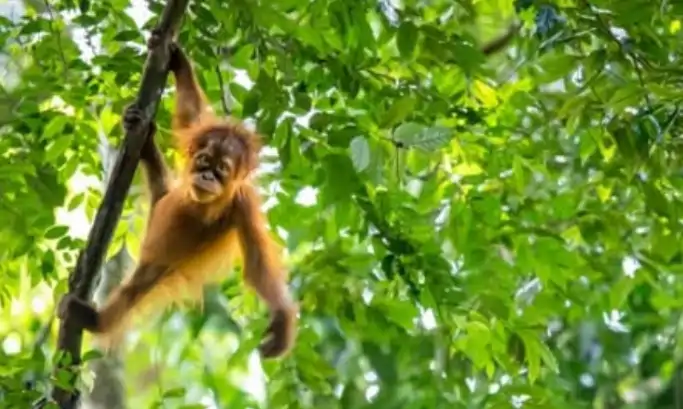
Jungle Camping with Orangutans in Bukit Lawang – Deep in the lush rainforests of northern Sumatra lies one of Southeast Asia’s most unforgettable wildlife experiences: jungle camping alongside wild orangutans. For travelers seeking raw nature, meaningful adventure, and a true escape from modern life, Bukit Lawang offers something rare—an authentic rainforest journey on the edge of Gunung Leuser National Park, one of the last strongholds of the endangered Sumatran orangutan.
This is not a luxury holiday.
It is humid, muddy, unpredictable—and absolutely unforgettable.
Below is a complete guide to jungle camping with orangutans in Sumatra, covering what the experience feels like, how trekking works, safety, preparation, and why this adventure is considered one of the most meaningful wildlife journeys in Indonesia.
Why Jungle Camping in Sumatra Is So Special
Across the world, opportunities to see great apes in the wild are extremely limited. Many wildlife encounters take place in controlled environments, sanctuaries, or distant national parks requiring expensive permits. In contrast, Bukit Lawang provides relatively accessible trekking routes where sightings of semi-wild and fully wild orangutans are genuinely possible.
Camping overnight inside the rainforest transforms a simple hike into a deep immersion in nature. Instead of returning to a guesthouse, you remain surrounded by towering trees, flowing river sounds, and nocturnal jungle life. The experience shifts from sightseeing to living inside the ecosystem, even if only for one night.
For many travelers, this moment—sleeping under a tarp while distant animals move through the forest—is the true highlight of visiting Sumatra.
The Journey to Bukit Lawang
Most adventures begin in Medan, the main gateway city in northern Sumatra. From there, travelers take a three- to four-hour drive through rural villages and palm plantations before the scenery gradually turns greener and wilder.
Arriving in Bukit Lawang feels like stepping into another rhythm of life:
No big hotels or shopping malls
Narrow riverside paths instead of busy streets
Jungle sounds replacing traffic noise
This quiet atmosphere prepares you mentally for the wilderness ahead.
What Happens During a Jungle Trek and Camping Trip
Day One: Entering the Rainforest
The trek usually begins in the morning after breakfast and a short briefing from licensed guides. Within minutes of leaving the village, the trail climbs into dense tropical forest where humidity rises and sunlight filters through thick canopy layers.
Common early sightings include:
Long-tailed macaques
Thomas leaf monkeys
Colorful birds and insects
But the real anticipation builds around one question:
Will we see an orangutan today?
Many groups do encounter them—sometimes surprisingly close. A mother carrying her baby slowly crossing branches above the trail is a moment of silence and awe shared by everyone present.
After several hours of hiking through steep and muddy terrain, guides choose a riverside clearing to build the jungle campsite.
Setting Up Camp in the Wild
Jungle camping in Bukit Lawang is simple but comfortable in a back-to-nature way:
Tarp shelters or basic tents
Thin mattresses and blankets
Fresh water from nearby streams
Dinner cooked by guides over a portable stove
Meals often include rice, vegetables, tempeh, eggs, or chicken, followed by tropical fruit and sweet tea. After a long trek, the food tastes surprisingly delicious.
As darkness falls, the rainforest transforms.
You begin to notice sounds you never hear in cities:
Crickets and frogs calling in rhythm
Leaves rustling from unseen animals
The constant flow of the river nearby
With no artificial light, the sky may reveal bright stars through gaps in the canopy. Many travelers describe this night as peaceful, surreal, and deeply grounding.
Day Two: Deeper Exploration and River Return
Morning in the jungle arrives with birdsong and cool mist rising from the forest floor. After a simple breakfast, trekking continues deeper into the rainforest, increasing chances of wildlife encounters.
Depending on conditions and group choice, the return to Bukit Lawang often includes river tubing—floating downstream on large rubber tubes while guides steer from behind. After the physical challenge of trekking, drifting along the river feels both fun and refreshing.
By afternoon, you return to the village tired, muddy, and incredibly satisfied.
Chances of Seeing Orangutans
One of Bukit Lawang’s biggest advantages is relatively high sighting probability compared to many other places in the world. However, honesty is important:
Sightings are common but never guaranteed
Some orangutans are rehabilitated and used to humans
Truly wild encounters are less predictable but very special
Even when orangutans are not seen, the rainforest experience itself—wildlife, scenery, and camping—remains worthwhile.
Physical Difficulty and Who This Trip Is For
Jungle trekking in Sumatra is moderately to highly challenging, depending on route and weather.
Expect:
Steep climbs and descents
Slippery mud after rain
Constant heat and humidity
Several hours of walking each day
This adventure is ideal for:
Nature lovers
Wildlife photographers
Active travelers seeking unique experiences
It may be difficult for:
Travelers with mobility issues
Those expecting luxury comfort
Visitors sensitive to heat or insects
Preparation and realistic expectations make a huge difference.
What to Pack for Jungle Camping
Bringing the right gear ensures comfort and safety:
Essential items
Lightweight trekking shoes with grip
Long pants and breathable shirts
Rain jacket or poncho
Insect repellent
Reusable water bottle
Small backpack
Helpful extras
Headlamp or flashlight
Power bank
Dry bag for electronics
Personal snacks
Travel light—guides usually carry camping equipment and food.
Responsible Wildlife Tourism
Because orangutans are critically endangered, ethical behavior is crucial:
Keep a safe distance (usually at least 7–10 meters)
Never feed or touch wildlife
Avoid flash photography
Follow guide instructions at all times
Choosing responsible local guides directly supports conservation and helps protect the rainforest from illegal logging and hunting.
Your visit can contribute positively—if done responsibly.
Best Time for Jungle Camping in Bukit Lawang
Sumatra’s rainforest is humid year-round, but seasons still matter.
June to September
Drier trails
Easier trekking
Most popular travel period
October to May
More rain and mud
Fewer tourists
Lush green scenery
Orangutans can be seen in any month, so timing depends mostly on comfort preferences.
Emotional Impact of the Experience
Beyond adventure and wildlife, jungle camping often creates something deeper:
perspective.
Living briefly without Wi-Fi, traffic, or modern distractions allows space to reconnect with nature—and with yourself. Watching an orangutan calmly move through ancient forest reminds many travelers how fragile and precious these ecosystems truly are.
It is common to leave Bukit Lawang not only with photos, but with greater awareness of conservation and environmental responsibility.
Few trips achieve that level of meaning.
Final Thoughts: The Ultimate Sumatra Adventure
Jungle camping with orangutans in Bukit Lawang is not comfortable, easy, or predictable.
But those are exactly the reasons it feels so real.
You will sweat.
You will walk through mud.
You may feel tired and sore.
Yet you may also experience:
Eye contact with a wild orangutan
Silence inside untouched rainforest
Sleep beside a flowing jungle river
A sense of connection rarely found in modern travel
For adventurous travelers, this journey is more than a tour—it is a powerful encounter with one of Earth’s last great rainforests.