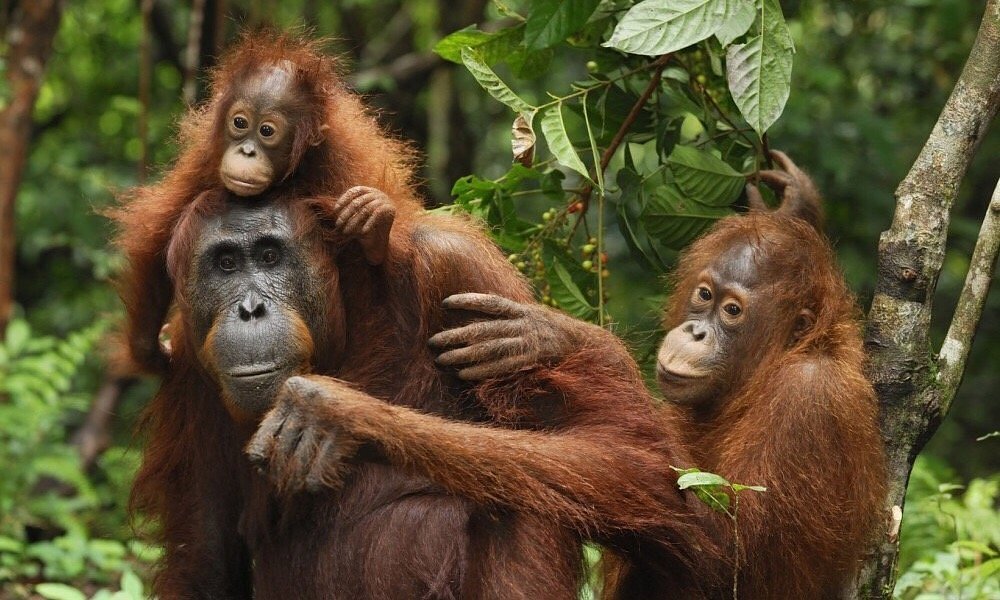
The Unique Species of Orangutans Found in Indonesia
Orangutans-Indonesia is home to two distinct species of
orangutans that are critical to the biodiversity of the region: the Bornean orangutan (
Pongo pygmaeus) and the Sumatran orangutan (
Pongo abelii). Each species exhibits unique physical characteristics and occupies different habitats, which play a significant role in their ecological functions.
The Bornean orangutan, primarily found on the island of Borneo, has a more robust physique compared to its Sumatran counterpart. Adult males typically possess larger cheek pads and a more substantial body mass. Their habitats range from lowland rainforests to peat swamp forests. This adaptability allows Bornean orangutans to thrive in various forest types across the island, though ongoing deforestation poses a severe threat to their survival. Population estimates suggest that there are over 55,000 Bornean orangutans remaining, and their conservation status is classified as “Endangered” by the IUCN Red List.In contrast, the Sumatran orangutan is confined to the northern region of Sumatra, primarily within the tropical rainforests. This species is generally smaller and has a softer, reddish-brown fur. They also exhibit behavioral differences, often showing more social interactions. The Sumatran orangutan is more critically endangered, with a population of approximately 14,000 individuals left in the wild. The primary threats to their existence include habitat loss, illegal logging, and agricultural expansion, particularly for palm oil plantations.Both species play vital roles in their ecosystems as seed dispersers, influencing forest regeneration. Given their ecological significance, it is essential to monitor and implement conservation strategies to protect these unique orangutan species in Indonesia.
Orangutans’ Remarkable Intelligence and Tool Use
Orangutans are widely recognized for their exceptional cognitive abilities, a trait that sets them apart from many other species in the animal kingdom. Their intelligence is particularly evident in their use of tools, a behavior that showcases their problem-solving skills and adaptability. Observations in the wild reveal that orangutans utilize sticks to extract insects from tree bark, using their dexterity and forethought. This technique demonstrates not only their ability to create tools but also their understanding of cause and effect in interactions with their environment.Moreover, orangutans are known to fashion leaves into makeshift umbrellas to shield themselves from rain, showcasing their innovative use of materials available in their surroundings. Such behaviors illustrate the intricate relationship between these great apes and their habitat, as they often manipulate objects to facilitate their daily activities. Studies reveal that orangutans possess remarkable social learning capabilities, often watching and imitating the actions of their peers when using tools. This ability is an important aspect of their intelligence, as it allows younger orangutans to learn essential survival skills from experienced individuals.Scientific investigations into the cognitive abilities of orangutans have further emphasized their complex memory systems and problem-solving strategies. Research has shown that these animals excel in tasks requiring spatial awareness and recall of past experiences, underscoring their cognitive depth. As a result, orangutans are not merely surviving but are actively engaging with their surroundings in sophisticated ways. The highlight of their tool-using behavior serves as a powerful reminder of the intricate neurological processes driving their intelligence. Such findings elevate orangutans beyond mere animals; they exhibit rich, profound minds capable of both individual thought and social interaction.
The Importance of Orangutans in Ecosystems
Orangutans, primarily found in the rainforests of Indonesia, play a vital role in maintaining the health and stability of their ecosystems. One of their key contributions is their function as seed dispersers. As orangutans consume fruits marked by high nutritional value, they inadvertently assist in the propagation of numerous tree species. The seeds that pass through their digestive system are often then deposited in new locations, complete with a natural fertilizer. This process promotes biodiversity and contributes to the growth of dense, varied forests.Moreover, the feeding habits of orangutans influence the structure of the rainforest. By consuming particular fruits and leaves, they help regulate which plant species thrive in a given area. Their preference for specific trees encourages a dynamic balance within the ecosystem, allowing different species to coexist and flourish. The intricate relationships between different flora and fauna are facilitated by the activities of orangutans, showcasing their essential role in the intricate web of life that forms the rainforest.However, the alarming decline in orangutan populations due to habitat destruction, primarily driven by logging and agricultural expansion, poses a significant threat to these ecosystems. The loss of orangutans can lead to a cascading effect, destabilizing the entire rainforest habitat. Fewer orangutans mean diminished seed dispersion, resulting in less plant diversity and reduced forest resilience. This not only jeopardizes the orangutans’ survival but also puts various plant and animal species at risk. Preserving orangutans is therefore fundamental to maintaining the integrity of the Indonesian rainforest, making their conservation a priority for ecological health and biodiversity.
Conservation Efforts and Their Impact on Orangutans
The conservation of orangutans in Indonesia has garnered significant attention in recent years, reflecting the critical status of these remarkable primates and their rapidly diminishing habitats. Various initiatives spearheaded by both government and non-government organizations have been implemented to protect these endangered species. These efforts primarily focus on habitat preservation and restoration, as well as the enactment of legislation to prevent poaching and illegal logging.One key aspect of conservation is habitat restoration. Organizations are actively involved in reforesting areas that have been devastated by illegal logging or agricultural expansion. These efforts not only provide crucial living spaces for orangutans but also help restore the rich biodiversity of the ecosystems in which they reside. Special projects are often tailored to rehabilitate orphaned or displaced orangutans, allowing them to be reintroduced into their natural environments.Community involvement plays a vital role in the effectiveness of these conservation projects. Local populations are educated about the importance of preserving orangutans, fostering a sense of ownership over their natural resources. Programs encouraging sustainable agriculture and eco-tourism help create alternative livelihoods for communities, reducing reliance on practices that endanger orangutan habitats. Through various awareness campaigns, local residents are empowered to protect wildlife and advocate for conservation.Numerous studies indicate that these conservation efforts have positively impacted orangutan populations, showing signs of recovery in some areas. Continued support for such initiatives is crucial, as deforestation and habitat loss remain significant threats. By leveraging government policies, non-profit programs, and community engagement, the chances of survival for orangutans in Indonesia increase substantially. It is imperative that these collaborative efforts persist, fostering a healthier ecosystem for generations to come.